Can You Deal With Gas Related Emergencies at Night?
By Plumbing Correct
Gas emergencies need the right first decision
A gas related emergency is not simply a boiler breakdown that happens after dark. The correct response depends on whether you are dealing with a suspected gas escape, carbon monoxide risk, a failed appliance, or a heating fault with no sign of a gas leak. Each situation carries a different level of danger and needs to be handled in the right order.
We provide 24/7 Plumber Callouts from Brentford for urgent plumbing and heating problems in the areas we cover. Our Gas Safe registered engineers can assess gas appliances, boiler faults and associated pipework, but immediate danger must always be dealt with before arranging a repair.
If you can smell gas, treat it as an escape
The smell added to mains gas is deliberately distinctive. If you notice it, do not start testing appliances or searching for the source. Avoid flames, cigarettes and anything that could create an ignition source. Do not operate light switches, plugs, doorbells or electrical controls inside the property.
If it is safe to do so, open doors and windows as you leave, then move everyone outside. Do not remain indoors to wait for an engineer. Contact the national gas emergency service and follow its instructions. If anyone feels unwell, move them into fresh air and seek urgent medical help.
This is an important distinction: a plumbing callout can deal with the consequences and inspect the relevant installation, but a suspected escape requires the gas emergency process first. We can then assess connected pipework or appliances when it is safe and appropriate to do so.
A boiler failure is not automatically a gas leak
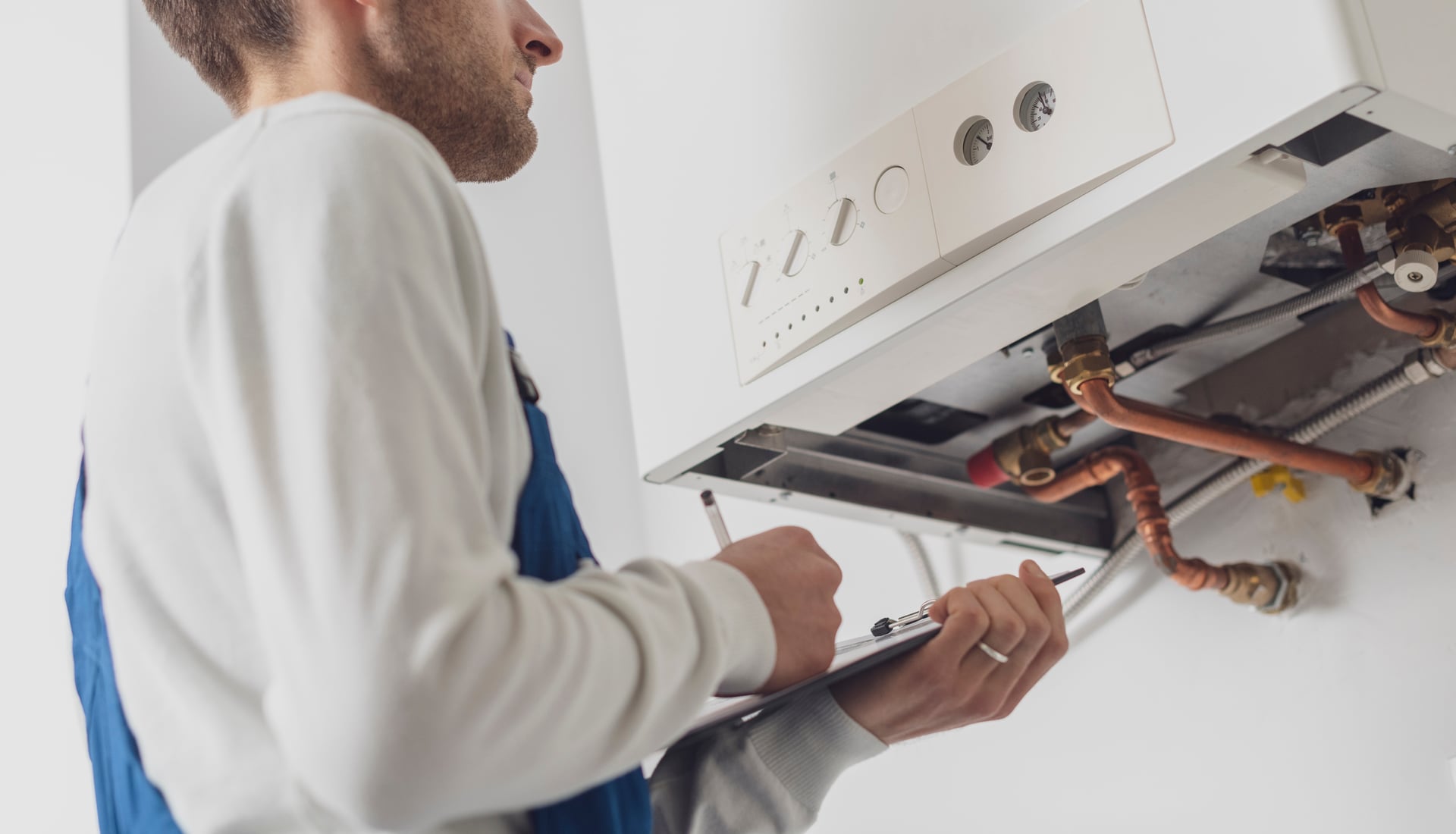
A boiler that stops working at night may have no gas escape at all. The cause could be an ignition fault, loss of electrical power, low system pressure, a condensate issue, a control failure or a fault elsewhere in the heating system. Resetting the boiler repeatedly will not identify the cause and can obscure what happened before the fault appeared.
Before calling, note what you can observe without removing any covers. Is there a fault code on the display? Is the rest of the property still receiving electricity? Do other gas appliances operate normally? Has the boiler made an unusual noise, or has there been a smell of gas? These details help us separate an appliance fault from a wider supply or safety issue.
Do not dismantle the boiler, interfere with gas connections or attempt to relight an appliance if you suspect it is unsafe. Gas work and safety checks need to be carried out by a Gas Safe registered engineer.
What happens when we attend
We start by establishing what changed and whether anyone has been exposed to immediate risk. That means checking the symptoms, the appliance involved, any visible damage and the surrounding installation. In a flat, this may also involve considering shared risers, neighbouring plant or access to communal areas. In an older West London property, pipework alterations and previous repairs can affect how a fault presents.
The next step is a safety assessment. We may need to isolate an appliance or section of pipework rather than attempt an immediate repair. Isolation is not a failure to solve the problem. It prevents an unsafe appliance from being used while the cause is investigated and the correct parts or follow-on work are identified.
Where the fault can be safely diagnosed and repaired during the visit, we explain what has failed and what the repair involves before proceeding. If a permanent repair needs additional parts or further work, the priority is to leave the installation in a safe condition and make the next step clear. We do not treat a temporary restart as proof that an appliance is safe.
Carbon monoxide makes ventilation and symptoms important
Carbon monoxide has no smell, so the absence of a gas odour does not rule out danger. Headaches, dizziness, nausea, unusual tiredness or confusion affecting more than one person can indicate a carbon monoxide problem, particularly if symptoms improve when you leave the property.
If you suspect carbon monoxide, leave immediately, avoid using the appliance and seek urgent advice. A carbon monoxide alarm should never be ignored or silenced without understanding why it has activated. Our engineer can assess the relevant boiler, appliance, flue and ventilation arrangements when the property is safe to enter and inspect.
Use the right route for the fault
Call the national gas emergency service first for a suspected gas escape or carbon monoxide danger. Contact us for urgent assessment of a boiler failure, loss of heating or hot water, gas appliance fault or related plumbing problem where there is no immediate evacuation risk.
When you call Plumbing Correct, give us the appliance type, visible fault code, symptoms and any action already taken. That information helps us triage the call properly and arrive prepared to assess the issue safely. For homes and flats in Brentford, Clapham, Richmond, Twickenham, Teddington, Putney, Notting Hill, Balham, Barnes, Chelsea and Kensington, our Gas Safe registered team can then advise on the safest repair route.